
Introduction
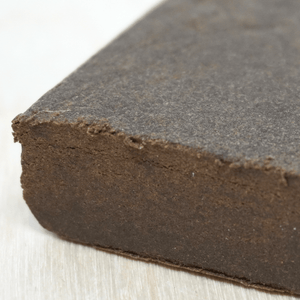
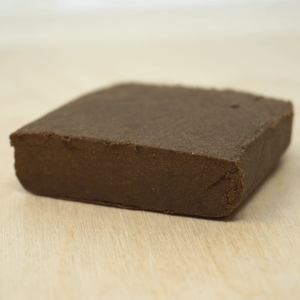
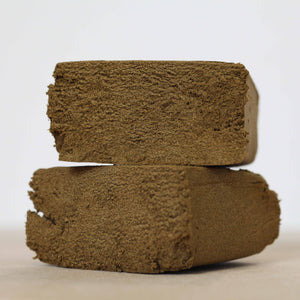
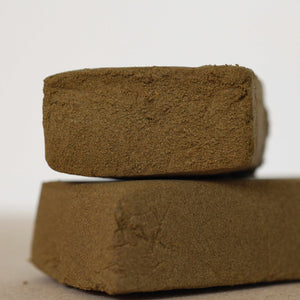
CBD hash and traditional cannabis hash can look remarkably similar. Both come from the cannabis plant, both contain resin-rich material and both are available in a range of textures and colours.
But there's an important difference: the cannabinoid profile of the plant material used to produce them.
While traditional cannabis hash is often associated with THC-dominant varieties, CBD hash is made using hemp material selected for its CBD content.
Let's look at what makes these products different and what they have in common.
What Is Traditional Hash?
Traditional hash, or hashish, is made by collecting and processing resin-rich trichomes from cannabis flowers.
For centuries, different regions have developed their own approaches to producing hash, creating products with characteristic textures, aromas and appearances.
Traditional cannabis hash is often produced from plants containing significant amounts of tetrahydrocannabinol, better known as THC.
THC is the main cannabinoid responsible for the intoxicating effects associated with cannabis.
However, not every traditional hash product has the same THC content, and appearance is not a reliable indicator of potency.
What Is CBD Hash?
CBD hash is also produced from resin-bearing cannabis material, but the starting material comes from hemp selected for a CBD-dominant profile.
CBD stands for cannabidiol, one of the naturally occurring cannabinoids found in cannabis.
Unlike THC, CBD does not produce the same characteristic intoxicating high.
That doesn't mean every CBD hash product is identical or entirely free from THC. The finished cannabinoid content depends on the plant and processing method.
Our CBD Hash collection includes hemp-derived products with different textures, CBD concentrations and aromatic characteristics.
CBD Hash vs Traditional Hash: Main Differences
| Feature | CBD Hash | Traditional Hash |
|---|---|---|
| Source material | CBD-dominant hemp | Commonly THC-rich cannabis |
| Main cannabinoid | CBD is prominent | THC is often prominent |
| Production | Resin collection and processing | Resin collection and processing |
| Texture | Soft, crumbly or pressed | Soft, crumbly or pressed |
| Aroma | Depends on terpenes and processing | Depends on terpenes and processing |
| Intoxicating potential | Depends on actual cannabinoid composition | Often associated with THC intoxication |
| Legal status | Product- and jurisdiction-dependent | Generally controlled under cannabis laws |
The similarities in appearance are important because you cannot reliably distinguish products by looking at them.
A brown, pressed resin product may contain a very different cannabinoid profile from another product with an almost identical appearance.
Do CBD Hash and Traditional Hash Look Different?
Not necessarily.
Both can appear in shades of golden brown, light brown or dark brown.
Some products have a dry and crumbly texture, while others are softer, stickier or more pliable.
These physical differences often reflect factors such as:
-
The hemp or cannabis variety
-
Trichome composition
-
Resin separation techniques
-
Processing conditions
-
Moisture content
-
Storage and age
Colour alone does not determine quality, cannabinoid concentration or legal status.
A pale hash product is not automatically stronger, and a darker product is not necessarily lower quality.
What About CBD and THC?
CBD and THC are cannabinoids naturally associated with the cannabis plant, but their pharmacological properties differ.
THC is intoxicating and can alter perception, coordination and cognition.
CBD does not generally produce the characteristic THC high, although it can still have physiological effects, side effects and interactions with medicines.
CBD products should not be assumed to be completely risk-free or suitable for everyone.
For general health information, see the HSE's guidance on cannabidiol.
Do Both Types of Hash Contain Terpenes?
They can.
Terpenes are aromatic compounds found naturally in cannabis and many other plants.
They contribute to the distinct aromas associated with different varieties, from earthy and woody notes to citrus, fruit and pine.
However, the amount and composition of terpenes in a finished hash product depend on the original plant and how the material was processed and stored.
Two hash products with similar cannabinoid concentrations can therefore have noticeably different aromas.
Read our existing article on what terpenes are and why they matter in CBD for a closer look.
How Can You Tell What a Hash Product Contains?
The most useful information comes from independent laboratory testing.
A certificate of analysis, commonly shortened to COA, can provide details about the tested sample's cannabinoid content.
When examining a report, look for:
-
The name of the laboratory
-
Product or batch identification
-
Date of analysis
-
CBD and THC results
-
Units of measurement
-
The cannabinoids included in the testing panel
If the report doesn't identify the product or batch, it's difficult to establish whether the results correspond to the item being sold.
Be cautious of marketing that relies entirely on descriptions such as "high strength", "premium" or "legal" without supporting information.
Are CBD Hash and Traditional Hash Treated Differently Under the Law?
Their legal treatment can differ, but the distinction is not as straightforward as assuming that all CBD products are legal.
In Ireland, pure CBD itself is not a controlled drug, but cannabis plant material and THC-containing products are subject to separate controls.
UK legislation also distinguishes pure CBD from cannabis and products containing controlled cannabinoids.
A claim such as "below 0.2% THC" does not, by itself, establish that finished hash is legally permitted for possession or sale.
For more information, refer to official Irish guidance and the UK Home Office factsheet.
Explore CBD Hash at Little Collins
CBD hash combines a long-established resin-processing tradition with modern hemp cultivation and cannabinoid testing.
When comparing products, it's worth looking beyond appearances and paying attention to texture, aroma, manufacturing information and the available laboratory results.
Visit the Little Collins CBD Hash collection to explore the current range.
You can also read our guide to what CBD buds are to learn more about the hemp flower that provides the starting material for resin-derived products.
Medical and Legal Disclaimer: The information in this article is educational and is not medical or legal advice. Little Collins does not claim that CBD products diagnose, treat, prevent or cure any condition. Always consult qualified healthcare or legal professionals for advice relevant to your circumstances.