
Introduction
If you are new to hemp products, the language can be confusing. CBD buds, CBD flower and hemp flower are often used to describe the same basic part of the plant, while terms such as “full-spectrum”, “terpenes” and “CBD percentage” add another layer of detail.
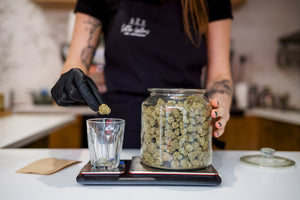
In simple terms, CBD buds are the harvested flowering tops of Cannabis sativa plants selected for a cannabinoid profile in which cannabidiol (CBD) is prominent. They retain the plant’s natural structure and contain a mixture of cannabinoids, aromatic compounds and other plant material. That makes them quite different in form from processed products such as CBD oil, paste or capsules.
This guide explains what CBD buds are, how they differ from THC-dominant cannabis, and what to look for when comparing products. It is general product information, not legal or medical advice.
Are CBD buds and CBD flower the same thing?
In everyday retail language, yes. “Bud” describes the compact flowering structure, while “flower” is the broader botanical and product term. “Hemp flower” is also commonly used when the plant has been cultivated as hemp. A shop may use all three phrases, but the product label and supporting documentation matter more than the name alone.
At Little Collins, the CBD Bud Dispensary is the broader shop-all collection. It can include CBD flower alongside related formats such as CBD hash and CBG flower. The dedicated CBD Flowers collection is the narrower place to compare flower products only.
CBD buds versus THC-dominant cannabis
CBD and delta-9-tetrahydrocannabinol (THC) are two different cannabinoids produced by Cannabis sativa. THC is associated with the intoxicating “high” of cannabis. CBD is not intoxicating in the same way. However, a product name or advertised CBD percentage does not prove the absence of THC or other controlled cannabinoids. Accurate labels, batch information and appropriate laboratory testing are therefore important.
It is also important not to confuse agricultural hemp limits with retail-product law. A THC percentage used to determine whether a hemp variety is eligible for cultivation under an agricultural scheme is not automatically a legal tolerance for every finished product. Rules differ by country and by product category, and they can change. For country-specific questions, consult current official guidance and obtain professional legal advice where needed.
What is naturally present in CBD flower?
Cannabinoids
Cannabinoids are compounds produced by the plant. CBD may be the headline cannabinoid in a CBD flower, but a laboratory report may also list smaller amounts of compounds such as CBDA, CBG or CBC. The exact profile depends on genetics, cultivation, harvest timing and post-harvest handling.
Terpenes
Terpenes are volatile aromatic compounds found throughout the plant world. In hemp flower, they contribute to citrus, pine, floral, fruity, spicy or earthy aromas. Because they are volatile, careless exposure to heat, air and light can reduce aroma over time. A strong smell alone is not proof of quality, but the aroma should be natural to the product and free from musty or chemical notes. For more information see our blog on Terpenes.
Flavonoids and other plant material
Flower also contains flavonoids, chlorophyll, waxes and other naturally occurring plant constituents. Together, these help explain why intact flower looks, smells and stores differently from a filtered oil or isolated cannabinoid ingredient.
What does “full-spectrum” mean?
“Full-spectrum” generally describes a product intended to retain a range of compounds from the source plant rather than CBD alone. The phrase is widely used but is not a substitute for a full ingredient list or laboratory report. When comparing products, look for specific evidence about what is present instead of relying on the marketing term by itself.
What does the CBD percentage mean?
A percentage expresses concentration by weight. A flower labelled 20% CBD is presented as containing approximately 20 parts CBD per 100 parts of dried flower, subject to the testing method and whether the figure refers to CBD alone or a calculated “total CBD” value that includes CBDA.
Higher is not automatically better. Genetics, aroma, cure, moisture, freshness and the wider cannabinoid profile all influence the character and quality of a flower. Compare like with like, check how the number was calculated, and look for a report linked to the relevant batch.
How can you assess a CBD bud product?
· Read the complete product description, not just the strain name or headline percentage.
· Check whether the cultivation method—such as indoor or glasshouse—is clearly stated.
· Look for batch identification and a recent, relevant certificate of analysis where available.
· Choose flower that appears properly trimmed and is neither powder-dry nor visibly damp.
· Avoid products with unexplained added cannabinoids, synthetic coatings or overpowering artificial aromas.
· Keep the original label and follow the stated storage instructions.
Where do CBD hash and CBG flower fit?
CBD hash is a processed hemp product with a different texture and concentration from intact flower. CBG flower is flower selected for a profile centred on cannabigerol (CBG) rather than CBD. They belong to the same wider hemp-product family, but they should not be treated as interchangeable. Little Collins separates them into dedicated collections while also presenting them together in the broader Bud Dispensary.