
CBD Buds vs CBD Oil
CBD buds and CBD oil may come from the same plant family, but they are very different products. Buds retain the physical structure of harvested hemp flower. CBD oil is a formulated liquid, typically combining a carrier oil with a CBD-containing ingredient.
Neither format is automatically “better”. The useful comparison is how each is made, labelled, stored and assessed—and which format fits the buyer’s preferences. This article provides general product information only and does not recommend consumption or make health claims.
The difference at a glance
|
Factor |
CBD buds |
CBD oil |
|
Form |
Intact dried hemp flower |
Liquid formulation in a bottle |
|
Main components |
Natural plant material with its documented cannabinoid and aromatic profile |
Carrier oil plus a CBD ingredient; composition varies by formula |
|
Aroma |
Usually distinctive and noticeable |
Often milder, depending on extract, carrier and flavouring |
|
Concentration display |
Often stated as a percentage |
Often stated in milligrams per bottle and/or percentage |
|
Measuring |
Requires an accurate scale if a precise weight is needed |
Bottle and dropper may make the labelled quantity easier to follow |
|
Storage |
Sealed, cool, dark and dry; protect from excess moisture |
Sealed, cool and dark; follow label and use-by guidance |
|
Key evidence |
Batch identity, cannabinoid analysis, cultivation and cure information |
Ingredients, batch identity, CBD content, testing and product authorisation status where applicable |
What are CBD buds?
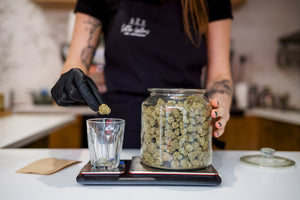
CBD buds are the flowering tops of hemp plants selected for a CBD-prominent cannabinoid profile. They are dried, cured and usually trimmed before packaging. Because the plant structure remains intact, appearance, moisture, aroma and trim are visible parts of the product assessment.
Flower may be described as indoor-grown or glasshouse-grown. Product pages may also state a CBD percentage and an aroma profile. These are useful details, but they should be supported by batch-specific information where possible.
What is CBD oil?
CBD oil is not simply oil pressed from hemp seeds. It is generally a formulation in which a CBD ingredient is combined with a carrier oil. The carrier might be hemp seed oil, MCT oil or another declared food-grade oil. The ingredient list should make the formulation clear.
Hemp seed oil and CBD oil are not synonyms. Hemp seed oil is pressed from seeds and naturally contains little or no CBD. A CBD oil contains an intentionally added CBD ingredient or hemp-derived extract. This distinction is especially important when reading labels and comparing prices.
Cannabinoid and terpene profiles
Intact flower naturally contains a mixture of cannabinoids and aromatic compounds, although the exact amounts vary. Oil can be formulated as full-spectrum, broad-spectrum or isolate-based, but those labels should be checked against the ingredient list and supporting analysis.
Processing can change which compounds are retained and at what concentration. A flower and an oil carrying similar CBD percentages should not be assumed to have identical wider profiles. Compare the actual certificate of analysis rather than inferring equivalence from the front label.
Understanding percentages and milligrams
Flower is commonly described using a percentage by weight. Oil is often described using the total milligrams of CBD in the complete bottle, sometimes alongside a percentage. A 10 ml bottle labelled 1,000 mg and a 30 ml bottle labelled 1,000 mg contain the same stated total amount but not the same concentration per millilitre.
Always check bottle volume, total CBD content and any per-serving information together. For flower, check whether the stated number represents measured CBD or calculated total CBD. Numbers are only meaningful when the basis of measurement is clear.
Convenience, aroma and discretion
Oil is compact and its bottle format can be easier to carry and measure according to the label. Flower has a more noticeable natural aroma and needs a suitable sealed container. For customers mainly interested in the sensory character of different hemp varieties, flower provides far more visible and aromatic variation. For customers who prioritise a standardised packaged format, oil may feel simpler.
Storage and shelf life
Both formats should be protected from light and excessive heat. Flower also needs careful moisture control: excessive humidity can encourage spoilage, while prolonged exposure to dry air can make it brittle and reduce aroma. Keep it sealed and inspect it before use.
CBD oil should remain tightly closed in its original bottle. Follow the manufacturer’s storage directions and use-by information. Cloudiness, separation or colour change does not have one universal meaning because carrier oils and extracts differ; if the product appears abnormal, consult the supplier rather than guessing.
Quality checks for both formats
· A complete, readable label and ingredient list where applicable.
· A batch or lot identifier that connects the product to its test information.
· A recent certificate of analysis from a competent laboratory.
· CBD and controlled-cannabinoid results presented with units and detection limits.
· Clear contact information for the responsible business.
· No unsupported promises to treat pain, anxiety, insomnia or another medical condition.
· No vague use of “hemp oil” that leaves the actual ingredients unclear.
Which format should you choose?
Choose based on product transparency and format preference rather than a promise that one works “better”. Flower suits buyers interested in the plant’s natural appearance and aroma. Oil suits buyers who prefer a compact, formulated product with quantities stated on the bottle. In either case, prioritise accurate labelling, traceability and current legal information.
Explore the range
Browse the Little Collins CBD Bud Dispensary for flower and related hemp products, or compare the current Full Spectrum CBD Oil range in the dedicated oil collection.